The Philadelphia Oil Tank Permit
Philadelphia treats a heating oil tank as a hazardous material tank, and you need a building permit from the Department of Licenses and Inspections to install or remove one. This applies to a tank buried in a yard and to a tank standing on a basement floor.
Nobody in the SERP for this question covers it, so here it is in full, with every figure read off the City's own page on August 13, 2026.
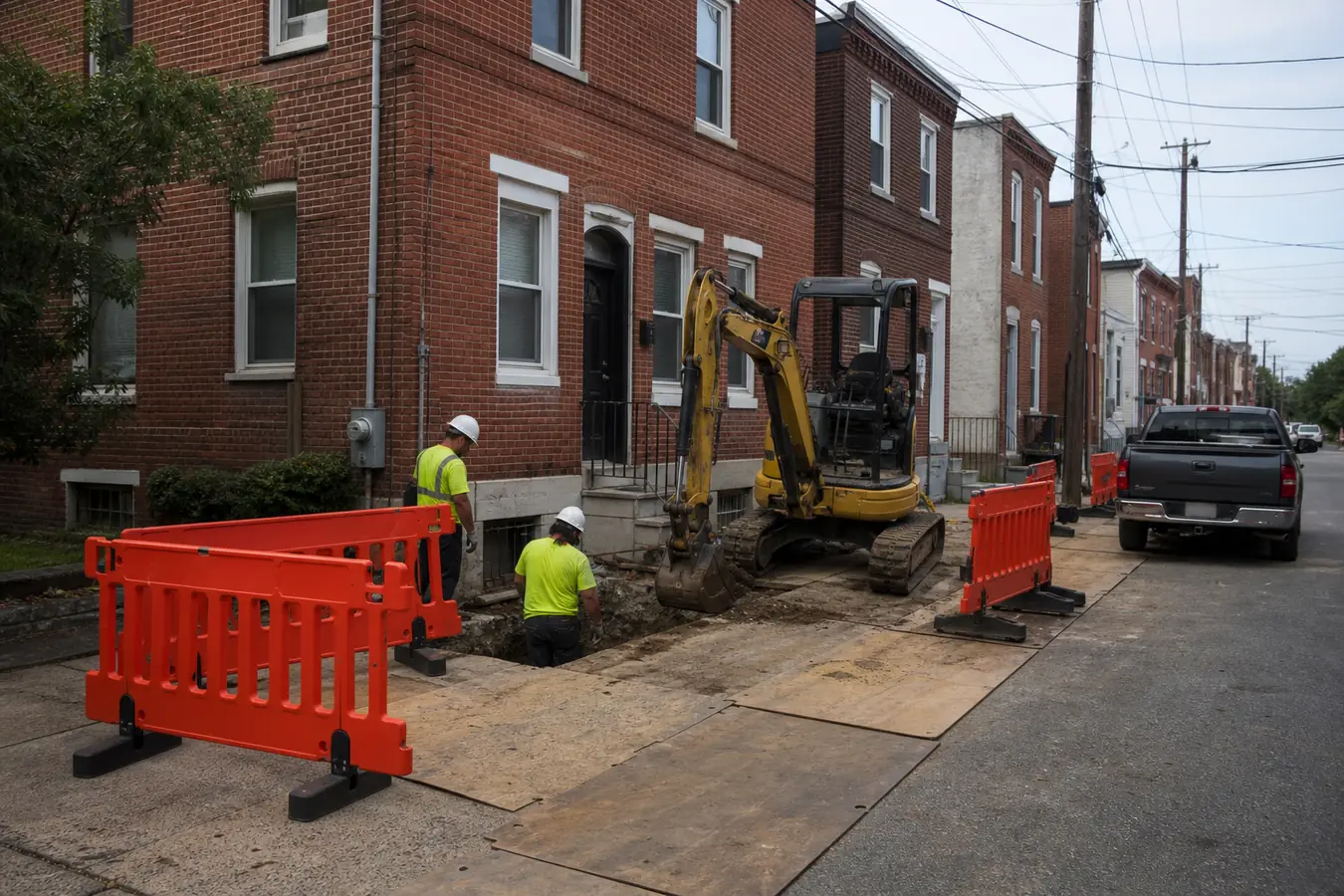
Who Is Allowed To Do The Work
The City requires a licensed contractor to perform all work. The contractor must hold an active license, be current on all City of Philadelphia taxes, and have current insurance on file with L&I. Where the tank is regulated by the Pennsylvania DEP, the contractor must also hold a DEP Company Certification in the applicable category.
That is three separate checks, and a contractor can fail any one of them while looking entirely legitimate. Being current on City taxes in particular is not something a homeowner would think to ask about, and it will stop a permit.
City of Philadelphia L&I, hazardous material tank permit (checked Aug 2026)
What It Costs
The filing fee is $25 for a one or two family dwelling and $100 for all other sites. The permit fee itself is $158 per tank. On top of that there is a $3 City surcharge and a $4.50 State surcharge per permit.
Records retention is charged at $4 per page for anything larger than 8.5 by 14 inches. Accelerated review is available at $2,000, with $350 payable up front, which is almost never worth it on a residential tank.
Two tanks means two permit fees. On a property with a buried tank in the yard and a disused tank in the basement, that is the line to check on a quote.
City of Philadelphia L&I, hazardous material tank permit (checked Aug 2026)
What The Plans Have To Show
The submitted plans must include the project address, the site dimensions and the location of the tank, the tank installation details, the venting, fill points and overflow protection, vehicle impact protection where applicable, the storage capacity, the material being stored, and, for an underground tank, the surface restoration details.
That last item is the one homeowners do not expect and the one worth reading carefully. The City is asking, before it approves anything, how the driveway, patio or yard is going back. If your contractor's plan says something vague there, the conversation about your reinstatement has not actually happened yet.
Plans for work over $25,000 must be sealed by a Pennsylvania-licensed engineer, and electronic submissions have to meet the City's ePlan standards.
City of Philadelphia L&I, hazardous material tank permit (checked Aug 2026)
Inspection And The Certificate Of Approval
Once the permit is approved, the inspection is scheduled with the local inspection office when the contractor is ready to start. A Certificate of Approval is issued when all required inspections have been completed successfully.
That certificate is the point of the exercise. It is the document a buyer's attorney, a title company or a lender will ask for, and it converts work that was done into work that can be proved. Keep it with the soil sampling results and the disposal manifests as one set.
City of Philadelphia L&I, hazardous material tank permit (checked Aug 2026)
Where To Take It
Permits and licences are handled through eCLIPSE, the City's online system, and inspections are requested through it or by phone on (215) 255-4040 or 311. The Permit and License Center is at 1401 John F. Kennedy Boulevard in the Municipal Services Building, open 8:00am to 3:30pm Monday to Friday.
On a job we handle, the permit is our filing rather than yours. This page exists so you can check that it was done, and check what you were charged for it.
City of Philadelphia L&I, hazardous material tank permit (checked Aug 2026)
Related
- What It CostsEvery line that moves the number, and the ones nobody quotes for
- Underground Tank RemovalExcavated, inspected in the open hole, hauled and documented
- Abandonment In PlaceWhen filling is allowed, and what a lender does with it afterwards
- Basement and Above-Ground TanksCut down and carried out of a rowhouse without opening the ground
Common Questions
- How much is an oil tank removal permit in Philadelphia?
- $158 per tank, plus a $25 filing fee for a one or two family dwelling ($100 for other sites), a $3 City surcharge and a $4.50 State surcharge per permit. Read off the City of Philadelphia service page on August 13, 2026.
- Can I pull the permit myself as the homeowner?
- The City requires a licensed contractor to perform the work, with an active license, current City taxes and insurance on file with L&I, plus a DEP Company Certification where the tank is DEP regulated. The permit is tied to that contractor.
- Do I need a permit if the tank is in the basement rather than buried?
- Yes. The requirement is for a permit to install or remove a hazardous material tank and does not turn on whether the tank is above or below ground.
- What do I get at the end?
- A Certificate of Approval, issued once all required inspections pass. Together with the soil sampling result and the disposal documentation, that is the record that closes the question for any future buyer or lender.
A Written Quote For Your Property
You do not need technical details. The address and where you think the tank sits are enough to start a useful conversation about access, permits and the likely method.
Where This Came From
Every fee, rule and figure on this page came from one of the following, each checked on the date shown. Full citations and links are on the sources page.
- City of Philadelphia, Get a building permit for a tank to store hazardous materials (checked Aug 2026)